Kayangan Lake Coron: Tours, Swimming and What to Expect
Planning to visit Kayangan Lake in Coron? Learn how to get there, which tours include it, what the climb is like, swimming rules, crowds, fees and what to bring.
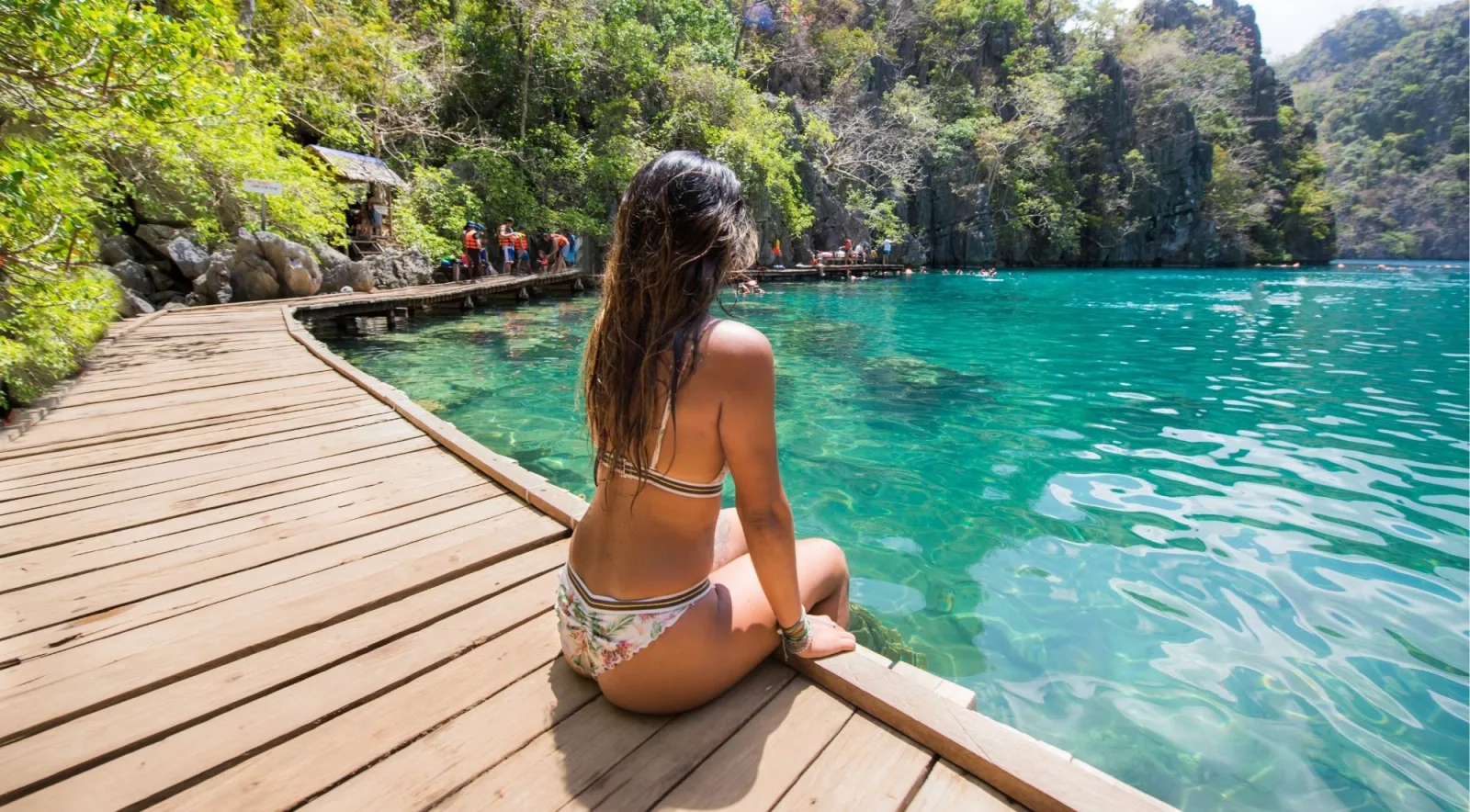
Kayangan Lake is the attraction most first-time visitors associate with Coron.
Surrounded by jagged limestone cliffs on Coron Island, the lake is famous for extraordinarily clear water, dramatic underwater rock formations and the viewpoint seen in countless photographs of Palawan.
Visiting involves more than stepping off a boat. You arrive at a small bay, climb a steep limestone staircase to the famous viewpoint, cross the ridge and descend to the lake itself.
Once there, the main activity is simple: swim.
Coron day tours sell out fastest in the December–April dry season, so it is worth checking live dates before fixing the rest of your Palawan itinerary.
Kayangan Lake at a Glance
| Kayangan Lake | |
|---|---|
| Location | Coron Island, Palawan |
| Starting point | Coron town |
| Access | Boat + short steep hike |
| Best activity | Swimming |
| Known for | Clear water, limestone scenery and viewpoint |
| Crowds | Usually high |
| Best for | First-time Coron visitors |
Where Is Kayangan Lake?
Kayangan Lake is on Coron Island, south of Coron town.
Coron town itself is on Busuanga Island, which causes frequent confusion. Travellers stay in town, then take island-hopping boats across to Coron Island.
You cannot drive to Kayangan Lake.
How Do You Get There?
The easiest method is a Coron island-hopping tour.
The journey usually involves:
- leaving Coron town by boat;
- arriving at Coron Island;
- climbing over the limestone ridge;
- stopping at the viewpoint;
- descending to the lake;
- swimming;
- returning to the boat.
Kayangan is commonly combined with Twin Lagoon, Barracuda Lake, snorkeling and a beach stop.
Which Coron Tour Includes Kayangan Lake?
Tour names are not standardised. Operators use labels such as:
- Ultimate Tour;
- Super Ultimate Tour;
- Coron Island Tour.
Ignore the label and check the actual list of stops.
For a first visit, look for a tour combining Kayangan Lake + Twin Lagoon + Barracuda Lake.
The Coron Ultimate Tour: 7 Destinations with Lunch & Transfers is the clearest example — a full day of 8–9 hours covering Kayangan Lake, Twin Lagoon, Barracuda Lake, CYC Beach, Skeleton Wreck, Lusong Coral Garden and Siete Pecados, with hotel pickup in Coron Town, lunch, snorkeling gear and all entrance and environmental fees included. It rates 4.8/5 across more than 1,400 reviews.
The Coron Super Ultimate Day Tour covers a comparable seven-stop circuit at a similar price and rates 4.8/5, though from a much smaller base of around 150 reviews.
Other Palawan Experiences You Might Enjoy
Kayangan is rarely the only thing on a Palawan itinerary. Most visitors pair Coron’s lakes with Twin Lagoon and Barracuda Lake on the same day, then look north to El Nido for Big Lagoon, Bacuit Bay and the Tour A lagoons. These are the current top-rated experiences at both ends of the route:
The Famous Viewpoint
The classic photograph associated with Kayangan Lake is taken during the climb.
Interestingly, the image looks back over the spectacular boat bay, not directly over the swimming area of Kayangan Lake itself.
The view includes:
- turquoise water;
- limestone cliffs;
- traditional boats;
- narrow channels between rock formations.
Do not rush past it.
Is the Climb Difficult?
It is short but steep.
Expect:
- stairs;
- uneven limestone;
- humidity;
- tropical heat;
- other visitors moving in both directions.
You do not need serious hiking experience, but secure footwear helps. Operators are explicit that the staircase is essential to the stop and cannot be bypassed, so travellers with significant mobility limitations should plan a different Coron day.
How Long Does the Climb Take?
Usually around 10–20 minutes, depending on fitness, crowds and time spent at the viewpoint.
The viewpoint queue can take longer than the actual climb.
Can Children Visit?
Yes, but supervision is essential because the visit involves boats, steep steps, slippery surfaces and deep water.
What Is the Water Like?
Kayangan is famous for clarity.
You may see:
- submerged limestone;
- rock walls;
- underwater contours;
- fallen branches.
The water is commonly described as brackish because freshwater and seawater influence the lake.
Can You Swim?
Yes. Swimming is one of the main reasons to visit.
Expect life jackets to be required or strongly enforced in the swimming area. Follow local rules even if you are a confident swimmer.
Is It Good for Snorkeling?
You can look beneath the surface, but Kayangan is not a conventional coral-reef snorkeling destination.
The underwater attraction is mainly the clear water and limestone geology.
For colourful reef life, include a site such as Siete Pecados elsewhere in your Coron itinerary — it is one of the seven stops on the Ultimate Tour circuit.
Diving and Freediving
Standard island-hopping visitors should treat Kayangan as a swimming and sightseeing stop.
Coron has dedicated diving experiences elsewhere, particularly Barracuda Lake and the WWII wrecks. Note that the day-tour circuit only snorkels the Skeleton Wreck at 8–12 metres; the deeper Japanese wrecks — Okikawa Maru, Irako and Olympia Maru — require a dedicated dive boat.
How Clear Is the Water?
Very clear under favourable conditions — visibility is often quoted at 20 metres or more — although it still changes with:
- weather;
- recent rain;
- sunlight;
- movement by swimmers.
Do not expect every day to look identical to edited promotional photographs.
Is It Really the Cleanest Lake in the Philippines?
Kayangan is widely promoted as one of the country’s cleanest inland bodies of water. The practical point for visitors is that the lake is exceptionally clear and access is managed to protect that quality — the permit and fee system limits daily visitor numbers for exactly that reason.
Tagbanua Ancestral Domain
Kayangan Lake lies within the ancestral domain of the Tagbanua people.
Treat the site as a culturally and environmentally significant place, not simply a public swimming pool.
Follow rules on access, waste, swimming and restricted areas.
Entrance Fees
Fees change, and some tour operators include them while others collect them separately.
Current visitor information commonly places Kayangan Lake site charges at around a few hundred pesos per person.
Ask:
“Are all entrance and conservation fees included?”
On the Coron Ultimate Tour they are, which removes the most common source of unexpected cost on a Coron day. Cheaper headline prices often do not, so compare what is actually covered rather than the fare alone.
How Long Do You Spend There?
Expect around 45 minutes to 1.5 hours including the climb, viewpoint, swimming and return.
A full seven-stop Coron day typically departs the pier between 8:30 and 9:00 AM and returns between 4:30 and 5:30 PM.
Is Kayangan Lake Crowded?
Usually, yes.
Crowds concentrate at:
- the landing;
- staircase;
- viewpoint;
- swimming platforms.
Private boats may help with timing but cannot guarantee an empty site.
Does the Crowd Make It Not Worth Visiting?
No.
Kayangan remains one of Coron’s strongest attractions because the combination of viewpoint, limestone and clear water is genuinely exceptional.
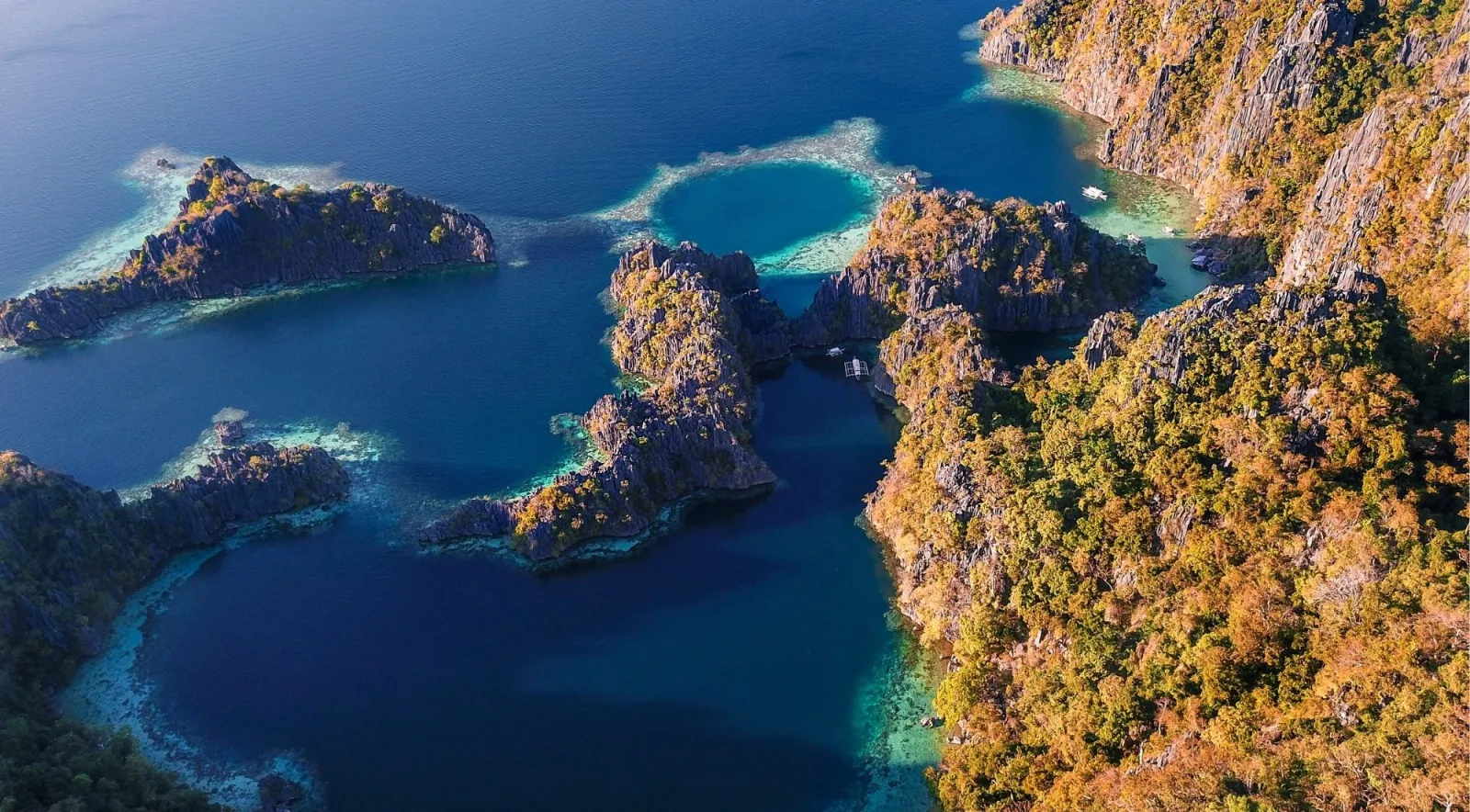
Kayangan Lake vs Twin Lagoon
Kayangan
Best for clear water, swimming and the famous viewpoint.
Twin Lagoon
Best for swimming between two connected lagoons and experiencing changing water temperatures — you pass through a warm underground passage between them.
If possible, visit both on the same day. Both are on the standard Ultimate Tour circuit.
Kayangan Lake vs Barracuda Lake
Kayangan is the stronger first-time sightseeing attraction.
Barracuda Lake is particularly fascinating for divers because of dramatic underwater limestone and thermoclines — the water temperature jumps from roughly 28°C to 38°C as you descend through the layer.
Kayangan Lake vs Big Lagoon El Nido
Big Lagoon is best explored by kayak. Kayangan is best experienced by climbing to the viewpoint and swimming in the lake.
They are different enough to justify visiting both destinations. Our El Nido vs Coron comparison covers the wider choice between the two bases.
What Should You Bring?
Bring:
- swimwear;
- dry bag;
- waterproof phone pouch;
- sunscreen — reef-safe, which is mandatory at the marine park stops;
- hat;
- water;
- towel;
- water shoes;
- cash;
- action camera.
Your own snorkeling mask is worth carrying if you have one — the fit is better than a shared rental, which matters at Barracuda Lake’s thermocline.
Best Time to Visit
The drier months generally give the most reliable island-hopping conditions, especially roughly December–April.
Schedule your priority Coron tour early in your stay so weather disruptions leave room to rearrange plans. See our best time to visit El Nido and Coron guide for the month-by-month breakdown.
Frequently Asked Questions
Where is Kayangan Lake?
On Coron Island, reached by boat from Coron town.
Which tour includes it?
Many Ultimate, Super Ultimate and Coron Island tours.
Can you swim?
Yes, usually with a life jacket.
Do you have to climb?
Yes, a short but steep staircase over the ridge.
Is the famous viewpoint actually the lake?
No. It overlooks the boat bay on the other side of the ridge.
Is it better than Twin Lagoon?
Different. Visit both if possible.
Is it suitable for children?
Yes with careful supervision.
Final Verdict
Kayangan Lake deserves its place near the top of a first-time Coron itinerary.
The viewpoint is spectacular, but the real highlight comes after you cross the ridge and enter the clear water beneath the limestone cliffs.
Combine it with Twin Lagoon and Barracuda Lake for one of the strongest sightseeing days in Palawan. If you are arriving from the north, our guide to how to get from El Nido to Coron covers the ferry, the flight and the multi-day expedition.
Book the El Nido to Coron Expedition
Join 585+ travelers rated 4.8/5. Three days of island hopping, snorkeling in Bacuit Bay, and crossing to Coron's legendary Twin Lagoon — with meals and accommodation included.
Check Availability & Book